História das Palestras Prestonianas
William Preston foi um dos maçons mais influentes do final do século XVIII e início do século XIX. Impressor de profissão, é mais conhecido como o autor das Ilustrações da Maçonaria, que apareceram de 1772 a 1861. Foi Venerável Mestre da Lodge of Antiquity, mas não deixou de causar controvérsias. Chegou mesmo a fundar uma breve Grande Loja de Inglaterra a Sul do Rio Trent, na sequência de uma discussão sobre o uso de trajes de cerimónia em público.
Regressando ao seio maçónico, Preston concebeu um sistema de palestras sobre os três graus do Ofício, tal como praticados na Antiguidade. Após a sua morte, em 1818, legou uma dotação de 300 libras à Grande Loja Unida para nomear um “Maçom bem informado para proferir anualmente uma palestra sobre o Primeiro, Segundo ou Terceiro Graus da ordem da Maçonaria”, esperando que o escolhido pudesse continuar o seu trabalho. O Grão-Mestre, Sua Alteza Real o Duque de Sussex, nomeou o amigo de Preston, Stephen Jones, como o primeiro prelector em 1820; este ocupou o cargo até à sua morte em 1827. Vários dos alunos de Preston mantiveram a honra até 1862, altura em que as palestras cessaram.
O fundo continuou a acumular-se até 1923, altura em que Alfred Robbins, Presidente do Board of General Purposes, propôs o relançamento das conferências, mas com uma alteração do formato. Isto incluía a nomeação de um Prelector Prestoniano anual para dar uma palestra sobre um assunto maçónico da sua escolha. Seriam providenciadas despesas e uma taxa para que o conferencista fizesse duas leituras oficiais. Uma seria em Londres, com a Lodge of Antiquity a receber a primeira, e a segunda numa Loja Provincial. Isto foi mais tarde alterado para três palestras oficiais.
A Grande Loja aceitou a proposta do Capitão C. W. Firebrace como Prelector Prestoniano inaugural em 1924. Ele era um antigo Venerável Mestre da Lodge of Antiquity e Preston teria aprovado o tema da sua palestra, o Primeiro Grau. A série de palestras, que agora inclui muitas apresentações não oficiais, é uma parte regular do calendário maçónico, embora a nomeação de novos palestrantes tenha sido brevemente suspensa durante a Segunda Guerra Mundial. O prelector pode proferir quantas leituras não oficiais quiser, e muitos são convidados a falar anos após o seu período oficial. Embora utilizando a Maçonaria como ponto de partida, o leque de temas abordados é vasto. Exemplos notáveis incluem: “The Transition from Operative to Speculative Masonry” (A transição da maçonaria operativa para a especulativa) (Harry Carr, 1957); “Drama and Craft” (Drama e Craft) (Neville Barker Cryer, 1974); “The Role of the Innkeeper in Masonry” (O papel do hospedeiro na Maçonaria) (Christopher Gotch, 1987); “Freemasonry and Sport” (Maçonaria e desporto) (John Webb, 1995); “Was Sir Christopher Wren a Freemason?” (Sir Christopher Wren era Maçom?”) (James Campbell, 2011) and “Freemasonry and the Royal Family” (A Maçonaria e a Família Real) (John Hawkins, 2022).
Por tradição, os conferencistas vendem versões impressas da apresentação para ajudar uma instituição de caridade da sua escolha. Por vezes, trata-se de instituições de caridade maçónicas, mas outras organizações também têm beneficiado. A palestra de Tony Harvey em 2012, “Scouting and Freemasonry: Two Parallel Organisations “ (Escutismo e Maçonaria: Duas Organizações Paralelas), apoiou o Fundo Samaritano Maçónico, bem como o Projecto de Desenvolvimento de Arquivos da Associação de Escuteiros.
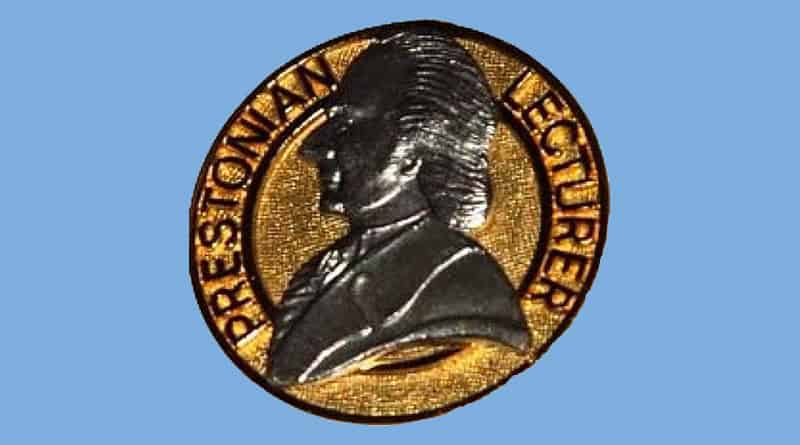
Para um académico maçónico, a nomeação como Prelector Prestoniano é uma distinção de honra, com o privilégio adicional de usar uma jóia de colarinho especial do estilo pin, com uma imagem de William Preston. Após um ano de serviço como Prelector Prestoniano, esta jóia é trocada por uma jóia pessoal para guardar. A maioria dos Prelectores Prestonianos é nomeada uma única vez, mas há excepções. O autor maçónico Lionel Vibert deu duas das três primeiras palestras da nova série, “The Development of the Trigradal System” (O desenvolvimento do sistema de três graus) em 1925 e “The Evolution of the Second Degree” (A evolução do segundo grau) em 1926. Ric Berman deu a palestra de 2016 sobre “Foundations: New Light on the Formation and Early Years of the Grand Lodge of England” (Fundações: Nova luz sobre a formação e os primeiros anos da Grande Loja de Inglaterra), e em 2024 ”The Second Grand Lodge. The Grand Lodge of Ireland, the London Irish and Antients Freemasonry” (A Segunda Grande Loja. A Grande Loja da Irlanda, a Maçonaria de Londres, Irlandesa e Antiga). George Boys-Stones, cuja série de palestras foi interrompida pela pandemia da COVID, apresentou “A System of Morality: Aristotle and the Making of Ritual” (Um sistema de moralidade: Aristóteles e a criação do ritual) em 2020, seguido de ”A System of Morality: Veiled in Allegory” (Um sistema de moralidade: Velado em Alegoria) em 2021.
O Museum of Freemasonry tem cópias de todas as Conferências Prestonianas impressas na sua colecção.
Aguardamos com expectativa a leitura da próxima Palestra Prestoniana de 2025, “Our Friends in the North” (Os nossos amigos no Norte), que será proferida por Simon Medland.
Martin Cherry, bibliotecário do Museum of Freemasonry
Tradução de António Jorge, M∴ M∴, membro de:- R∴ L∴ Mestre Affonso Domingues, nº 5 (GLLP / GLRP)
- Ex Libris Lodge, nº 3765 (UGLE)
- Lodge of Discoveries, nº 9409 (UGLE)
Nota: O Freemason.pt vai fazer a publicação gradual da tradução para Português das Palestras Pretonianas
Anexo – Lista das Palestras Prestonianas (1924 – 2025)
| Ano | Título | Palestrante |
| 1924 (*) | The First Degree | C. W. Firebrace |
| 1925 | The Development of the Trigradal System (Parte I / Parte II) | L. Vibert |
| 1926 | The Evolution of the Second Degree | L. Vibert |
| 1927 | Bro William Preston: the Man, his Methods & Work | G. P. G. Hills |
| 1928 | Masonic Teachers of the Eighteenth Century | J. Stokes |
| 1929 | The Antiquity of Our Masonic Legends | R. H. Baxter |
| 1930 | The Seven Liberal Arts and Sciences | H. D. de Lafontaine |
| 1931 | Medieval Master Masons and their Secrets | W. Covey Crump |
| 1932 (*) | The Evolution of Masonic Ritual in England in the 18th Century | J. H. Lepper |
| 1933 | The Old Charges in Eighteenth Century Masonry | H. Poole |
| 1934 | The Art, Craft, Science, or ‘Mystery’ of Masonry | F. C. C. M. Fighiera |
| 1935 | Freemasonry and Contemplative Art | W. J. Bunney |
| 1936 | Freemasonry, Ritual and Ceremonial | L. Edwards |
| 1937 | Inwardness of Masonic Symbolism in the Three Degrees | J. Johnson |
| 1938 | The Mason Word | D. Knoop |
| 1939 | Veiled in Allegory and Illustrated by Symbols | G. E. W. Bridge |
| 1940-1946 | Suspended due to II World War | |
| 1947 | The Grand Lodge South of the River Trent | G. Y. Johnson |
| 1948 | The Deluge | F. L. Pick |
| 1949 | Our Oldest Lodge | C. C. Adams |
| 1950 | Lodges of Instruction, their Origin and Development | W. I. Grantham |
| 1951 (*) | Variations in Masonic Ceremonial | H. W. Chetwin |
| 1952 | Free in Freemason: The Idea of Freedom through Six Centuries | B. E. Jones |
| 1953 | What is Freemasonry? | G. S. Shepherd-Jones |
| 1954 | The Freemason’s Education | B. W. Oliver |
| 1955 | The Fellowship of Knowledge | J. R. Rylands |
| 1956 | The Making of a Mason | G. S. Draffen |
| 1957 | The Transition from Operative to Speculative Masonry | H. Carr |
| 1958 | The Years of Development | N. Rogers |
| 1959 | Medieval Organisation of Freemasons’ Lodges | J. S. Purvis |
| 1960 | Growth of Freemasonry in England & Wales since 1717 | S. Pope |
| 1961 | King Solomon in the Middle Ages | G. Brett |
| 1962 | The Grand Mastership of HRH the Duke of Sussex | P. R. James |
| 1963 | Folklore into Masonry | H. G. M. Clarke |
| 1964 | The Genesis of Freemasonry | A. J. Arkell |
| 1965 | Brethren who Made Masonic History | E. Newton |
| 1966 | The Evolution of the English Provincial Grand Lodge | W. R. S. Bathurst |
| 1967 | The Grand Lodge of England: the First Hundred Years | A. R. Hewitt |
| 1968 | The Five Noble Orders of Architecture | H. K. Atkins |
| 1969 | External Influences on the Evolution of English Masonry | J. R. Clarke |
| 1970 | In the Beginning was the Word | E. Ward |
| 1971 | Masters and Master Masons | R. Tydeman |
| 1972 | ‘It is not in the power of any man’: a Study in Change | T. O. Haunch |
| 1973 | In Search of Ritual Uniformity | C. F. W. Dyer |
| 1974 | Drama and Craft | N. Barker Cryer |
| 1975 | Anthony Sayer, Gentleman: the Truth at Last | T. Beck |
| 1976 | Preston’s England | A. C. F. Jackson |
| 1977 | The Tyler or Outer Guard | R. A. Wells |
| 1978 | Grand Stewards 1728-1978 | C. Mackechnie-Jarvis |
| 1979 | 250 Years of Masonry in India | G. E. Walker |
| 1980 | Robert Freke Gould | F. J. Cooper |
| 1981 | Grand Lodge of England According to the Old Institutions | C. N. Batham |
| 1982 | The Government of the Craft | J. Stubbs |
| 1983 | The Pre-Eminence of the Great Architect in Freemasonry | R. H. S. Rottenbury |
| 1984 | Getting and Giving Masonic Knowledge | H. Mendoza |
| 1985 | ‘Not only Ancient but useful and necessary’: Deacons | S. Bruce |
| 1986 | The Old Charges | W. McLeod |
| 1987 | The Role of the Innkeeper in Masonry | C. Gotch |
| 1988 | Music and Masonry | A. I. Pearmain |
| 1989 | The Book of Constitutions of UGLE | Sir L. Brett |
| 1990 | The Master-Mason-at-Arms | F. Smyth |
| 1991 | Freemasons at War | K. T. Flynn |
| 1992 | Masonry: Pure and Applied | M. Morgan |
| 1993 | ‘And the Greatest of These is Charity’ | J. M. Hamill |
| 1994 | English Freemasonry in Europe, 1717-1919 | M. L. Brodsky |
| 1995 | Freemasonry and Sport | J. Webb |
| 1996 | The Freemasons and the Friendly Societies | J. F. Goodchild |
| 1997 | The Image of Freemasonry in Popular Fiction | R. A. Gilbert |
| 1998 | Elias Ashmole: the First Recorded English Freemason | B. F. Page |
| 1999 | Freemasonry and Entertainment | J. F. Ashby |
| 2000 | ‘for therein you will be taught. . . ’ | R. A. Crane |
| 2001 (*) | The First Degree in Freemasonry | S. Fernie |
| 2002 | The Anglo-Irish Masonic Connections | C. Wallis-Newport |
| 2003 | The Contribution of the Provinces to the Development of English Freemasonry | A. N. Newman |
| 2004 | English Freemasonry: Origins, Themes & Developments | A. T. Stewart |
| 2005 | Women and Freemasonry | G. W. S. Davie |
| 2006 | The Victoria Cross — Freemasons’ Band of Brothers | G. S. Angell |
| 2007 | Grand Secretaries of the UGLE (1813-1980) | R. B. F. Khambatta |
| 2008 | The Language of Ritual | R. Sillett |
| 2009 | Go and Do Thou Likewise (Masonic Processions) | J. Wade |
| 2010 | Music in Masonry and Beyond | W. Warlow |
| 2011 | Was Sir Christopher Wren a Freemason? | J. W. P. Campbell |
| 2012 | Scouting and Freemasonry: Two Parallel Organisations? | A. D. G. Harvey |
| 2013 | ‘As we were seen — the Press and Freemasonry’ | P. R. Calderwood |
| 2014 | 1814 Consolidation and Change: the first year of the United Grand Lodge of England | M. A. Kearsley |
| 2015 | Wherever Dispersed: The Traveling Mason | R. Burt |
| 2016 | Foundations: new light on the formation and early years of the Grand Lodge of England | R. A. Berman |
| 2017 | The Grand Design | J. W. Daniel |
| 2018 | A Good Workman Praises His Tools: Masonic Metaphors in the Ancient World | C. P. Noon |
| 2019 | English Freemasonry during the Great War | M. Karn |
| 2020 | A ‘System of Morality’: Aristotle and the Making of Ritual | G. R. Boys-Stones |
| 2021 | A ‘System of Morality’: Aristotle and the Making of Ritual | G. R. Boys-Stones |
| 2022 | Freemasonry and the Royal Family | J. W. Hawkins |
| 2023 | The 1723 Constitutions. The Indispensable Trowel: Cementing America’s Foundations’ | A. Elias |
| 2024 | The Second Grand Lodge. The Grand Lodge of Ireland, the London Irish & Antients Freemasonry | R. A. Berman |
| 2025 | Our Friends in the North | S. E. Medland |
(*) – Palestra não impressa devido ao conteúdo esotérico
